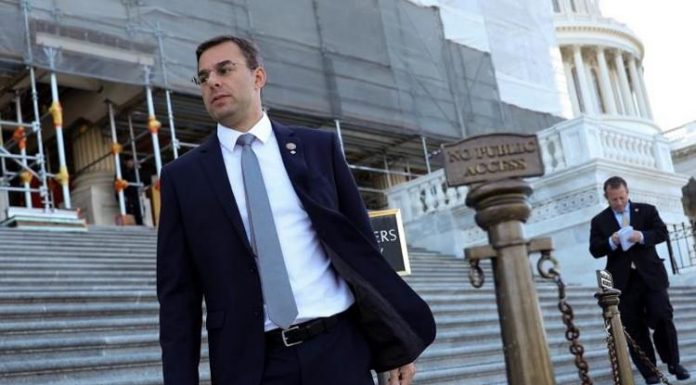

Despite having been decisively rejected by the people and Congress, the Cyber Information Sharing and Protection Act (CISPA) is back in the House of Representatives, once again up for a vote with supporters hoping that the people are no longer paying attention.
Now is the time to take action to let them know you don’t want the government and big businesses accessing and sharing your email and personal data without any kind of warrant or due process of law.
CISPA (HR624) would massively reduce the privacy and security of your online communications and personal data. It would give government agencies and many private companies access to your personal communications and financial information and would allow government security agencies like the National Security Agency unprecedented power to access your data including medical records, private emails and financial information – all without a warrant, oversight by any court or due process of law. It is supported by government security agencies like the Department of Homeland Security and also by big online data companies like Google and Facebook which want to use your data for marketing with fewer restrictions.
This access to your records would require no misbehavior on your part, not even an accusation of terrorism or criminal activity and it would take place without your knowledge or permission or any opportunity to protect your information or your privacy interests. That information could then be passed on to private companies or other agencies or used against you with no real rules or restrictions on who could access it or what hands it would end up in.
The Republican Liberty Caucus joins with other concerned groups like the Liberty Coalition and the Electronic Frontier Foundation and the ACLU in opposition to CISPA in any form or under any name. We stopped CISPA, SOPA and PIPA last Congress and now we have to fight that battle again.
We urge you to email your representative in Congress and tell them to oppose CISPA and keep government agencies out of our private online data and communications and to stand up and overturn CISPA if it is introduced by executive order. You need to take information now. The vote is scheduled for Thursday April 18th.
You can start with an email to your representatives using the form below. Customize the text to express your personal outrage.
The views expressed here are solely those of the author and do not necessarily reflect official positions of the RLC.
We thought the NDAA was fixed. We thought we had won the fight. Between a court injunction and the hard work of Senators Mike Lee and Rand Paul to pass the Feinstein-Lee Amendment, we thought that the issue of indefinite detention of US citizens without trial had been laid to rest and that the NDAA was finally fixed. We saw the bill pass the Senate and celebrated a major legislative victory.
Then it went to a conference committee chaired by John McCain which was tasked with reconciling the House and Senate versions, and despite all good sense and the cries of the people, the final version which will be voted on by both Houses on Thursday has had the strong language against indefinite detention taken out of it and replaced with redundant and watered down platitudes.
At this point the only viable course of action is to tell the House and Senate to vote down the bill and insist that it go back to committee and have the Lee-Feinstein Amendment wording restored to protect the rights of our citizens against unprecedented abuses of their most fundamental rights.
The big challenge here is that both houses will vote on the bill sometime Thursday, so you need to take action right now. Use the handy tool below to email your Senators and Representative and tell them you want them to stand up for liberty and the Constitution and vote down the conference committee version of the NDAA and send it back to be fixed.
John McCain is the Chairman of the Conference Committee. He’s the one who put indefinite detention back in the bill. In addition to emailing, take a few minutes to call him and tell him what you think of Republicans who don’t believe in the rule of law and the Constitution at (202) 224-2235.
Make sure to customize the language of the email to make it unique and in your own words.
The views expressed here are solely those of the author and do not necessarily reflect official positions of the RLC.
On Thrusday an amendment authored by Senators Mike Lee (RLC-UT) and Daine Feinstein (D-CA) which alters the NDAA to protect citizens from arrest without a warrant and guarantees the right to a trial was passed 67-29 by the Senate. This came after an impassioned speech in support by Sen. Rand Paul (RLC-KY) on Wednesday in which he said:
“If you don’t have a right to trial by jury, you do not have due process. You do not have a Constitution. What are you fighting against and for if you throw the Constitution out? When zealots of the government arrest suspects or radicals without warrants, hold them without trial, deny them access to counsel or admission of bail, we have shorn the Bill of Rights of its sanctity.”
Paul had also threatened to put a filibuster hold on the NDAA bill if an attempt was made to pass it with the provisions allowing unconstitutional detention of citizens without a trial included. Since the passage of an earlier version of the NDAA more than a year ago, grassroots groups like the Republican Liberty Caucus have been calling and emailing members of the House and Senate relentlessly expressing opposition to the detention provisions in the bill and it appears that for once our legislative leaders actually listened to the people. Sadly about half of the Republicans in the Senate voted against the amendment.
While the Lee-Feinstein amendment is not as comprehensive as Rand Paul’s version which has had trouble passing the Senate, it does address the most fundamental civil liberties concerns with the NDAA. The substandive part of the Amendment reads:
“(b)(1) An authorization to use military force, a declaration of war, or any similar authority shall not authorize the detention without charge or trial of a citizen or lawful permanent resident of the United States apprehended in the United States, unless an Act of Congress expressly authorizes such detention.
“(2) Paragraph (1) applies to an authorization to use military force, a declaration of war, or any similar authority enacted before, on, or after the date of the enactment of the National Defense Authorization Act For Fiscal Year 2013.
“(3) Paragraph (1) shall not be construed to authorize the detention of a citizen of the United States, a lawful permanent resident of the United States, or any other person who is apprehended in the United States.”
The final clause of (b)(1) has attracted some criticism, including from Representative Justin Amash (RLC-MI) who whote:
“The Feinstein amendment to the 2013 NDAA does NOT protect you from indefinite detention without charge or trial. In fact, it explicitly permits such detention so long as the detention is approved by an Act of Congress . . . such as the 2012 NDAA.”
Prior to the amendment the NDAA permitted detentions solely on presidential authority, but Amash and others are concerned that Congress could use the option provided in the amendment to reverse the protection at will, or that courts could interpret the NDAA itself as such an authorization. However, Senator Lee has issued an explanation of how the amendment works in context which makes very clear that no existing legislation including the NDAA itself would negate the protections in the amendment, hailing it as “a clear victory for civil libertarians and should be celebrated as a strong step forward in protecting due process rights for all Americans.”
However, a federal court did already grant an injunction against the detention provision in the NDAA and it is likely that if it were further tested in the courts it would be found unconstitutional. In addition, changes to the main text of the 2012 version of the NDAA which actually expand detention authority beyond earlier versions demanded that some response be made to protect civil liberties
While this is not a perfect victory, it remains a major win for civil libertarians who do not believe that the people should have to sacrifice their most sacred rights, nor should the nation abandon the rule of law, even in a times of crisis or war. If the Bill of Rights can be discarded just because we feel threatened, then we have already thrown away the very values for which we fight as a nation.
The views expressed here are solely those of the author and do not necessarily reflect official positions of the RLC.
Drawing on the Supreme Court’s decision in Hamdi vs. Rumsfeld, the US District Court of the Southern Region of New York has granted a permanent injunction against the exercise of the indefinite military detention powers claimed by the United States government in section 1021 of the National Defense Authorization Act.
The 112 page decision goes into great detail on how the threat of indefinite detention without due process of law imposes a chilling effect on the free speech rights of critics of the government, as exemplified by the plaintiffs who include prominent government critics and radicals like Noam Chomsky.
During the Congressional debate over the passage of the NDAA many in Congress claimed that the bill did not contain provisions for the indefinite detention of civilians in violation of their Constitutional rights. The proponents of the bill went to some lengths to rearrange the text and obscure the presence of those provisions to give them grounds for denying their existence. As demonstrated in the video accompanying this article, some supporters of the bill like Rep. Allen West (R-FL) were insultingly dismissive of those who complained about the NDAA. The court’s ruling definitively refutes any contention that the NDAA does not include these provisions, confirming the opinions of many civil rights lawyers and explaining in detail how section 1021 of the NDAA could be used to deprive citizens of their liberty at the whim of the Executive Branch.
At the time the NDAA was being debated groups like the American Civil Liberties Union and the Republican Liberty Caucus went to great lengths to provide legislators with detailed and up to date information on the dangerous content of the bill and organized extensive write-in and call-in campaigns opposing its passage. These efforts were coordinated with the efforts of legislators like Sen. Rand Paul (R-KY) who spoke up against the bill in Congress.
There is really no excuse for those legislators who voted for the NDAA. The flaws in the content were too well known and well publicized for them to plead ignorance. Voters are unlikely to find the self-serving arguments of the bill’s authors that terrorism is such a threat that we need to give up our basic civil liberties to be persuasive now that the court has issued this injunction.
Those who claimed the NDAA did not include this provision should read the detailed explantion of the content of the bil in this ruling and at the very least they should publicly apologize. It would not be unreasonable for some of the more outspoken advocates of the bill like Rep. West to resign. The ruling is absolutely unequivocal that the NDAA does give the President the power to suspend due process and allow the military to arrest civilians and hold them indefinitely without charges or trial.
If you have time to read the ruling, the summary of the arguments made by lawyers from the Justice Department is eye-opening. Their presentation of their position is so arrogant and they seem to be so callous in their disdain for the rights of citizens that they raise questions about their fitness and public servants and the failure of Attorney General Eric Holder to uphold his responsibility as the chief advocate for the people and their rights. He seems to have forgotten that he is the people’s lawyer and become nothing but a mouthpiece for the government.
The ruling concludes:
“Military detention based on allegations of “substantially supporting” or “directly supporting” the Taliban, al-Qaeda or associated forces, is not encompassed within the AUMF and is enjoined by this Order regarding § 1021(b) (2). No detention based upon § 1021(b) (2) can occur.”
In granting an injunction the court not only makes clear that the NDAA contains these powers, but also blocks their exercise, protecting the rights of citizens. It is a travesty that we should have to rely on the courts to protect us from such a clear violation of our rights. Our elected representatives ought to be looking out for our interests and should never have passed the NDAA in its current form. Far too many of them failed in this basic responsibility to their constituents.
For the time being we are free of this gross abuse of government power, but it is likely that Attorney General Holder will appeal the ruling and attempt to reclaim this power, and it’s probably inevitable that the Tweedle Dum and Tweedle Dee of Senatorial malfeasance, John McCain (R-AZ) and Carl Levin (D-MI) will look for new ways to incorporate indefinite military detention powers in the NDAA when it comes up for review next year.
The views expressed here are solely those of the author and do not necessarily reflect official positions of the RLC.
Remember the 4th Amendment? How does a remote controlled drone knock on your door and present a search warrant?
The answer is that it can’t.
In the name of security our government at the federal, state and local level, has launched another assault on oiur 4th Amendment rights by authorizing the use of military style drones to monitor the activities of civilians with no warrants and no due process of law. With penetrating scanning technology these drones can watch you and listen to your conversations through the walls of your house and even read your email remotely without you even being aware that you are under surveillance, all of this without any kind of Constitutionally required due process of law – no hearing, no charges, no search warrant. Under the PATRIOT Act that drone might as well be sitting in your living room or bedroom, invading every private aspect of your life.
Senator Rand Paul has introduced the Preserving Freedom from Unwarranted Surveillance Act (S. 3287) which would require a legal warrant issued by a judge before drones were used for any purpose other than patrolling the borders or pursuing known terrorism suspects. It would keep drones from engaging in preemptive surveillance or broadly tasked data gathering missions as proposed in the PATRIOT Act. It would protect you and other law abiding citizens from being monitored by drones for nothing more than the convenience and curiosity of the NSA or local law enforcement.
Read more about the bill in The Hill and please use our convenient tool below to write your Senators today and ask them to join on as sponsors.
The views expressed here are solely those of the author and do not necessarily reflect official positions of the RLC.
UPDATE A deal was worked out on Wednesday which selected 17 Amendments to the FDA bill to be voted on on Thursday. Sen. Paul’s amendment was included among the 17 so we now have until some time Thursday get people to email their Senators to to encourage them to support the Paul amendment.
On Thursday the Senate is expected to vote on the Federal Food Drug and Cosmetic Act which contains authorization for the continued operation of the Food and Drug Administration. Senator Rand Paul has offered an amendment to this bill which addresses key problems with the FDA (S.3187).
This amendment targets two key areas of abuse of power by the FDA, regulatory overreach and abusive enforcement powers.
The first goal of the Paul Amendment is to reign in FDA overreach in regulating dietary supplements and deliberately misclassifying foods, vitamins and natural medicines as drugs, placing them under inappropriate restrictions or removing them from the market entirely. This addresses an ongoing problem with the FDA attempting to expand its authority to interfere more and more with the health food and natural medicine market to reduce competition with commercial pharmaceuticals. Paul’s proposal does not limit reasonable regulation of dangerous substances, but does target opportunistic overregulation.
The second target of the amendment is the excessive expansion of enforcement power in the FDA. This has become a problem with a number of federal agencies which have decided they need their own police forces. In the case of the FDA they have developed a cadre of armed enforcement officers and are sending them out to conduct forced inspections of manufacturing facilities and farms, often carrying out searches and making arrests without a warrant in violation of the 4th Amendment. It is questionable that the FDA should ever have been given the power to arrest people and they certainly shouldn’t have their own armed enforcement units. The Paul amendment would disarm the FDA and require them to follow due process in going after violators.
This amendment addresses a serious problem with one of many federal agencies which have gone far beyond their legitimately authorized power. FDA regulation should be strictly restricted to keep the market in health supplements and foods as free as possible and enforcement of their regulations should be handled as a civil process or by local law enforcement or existing federal enforcement agencies.
Please write your Senators to encourage them to vote with Rand Paul to limit the power of the FDA and end regulatory abuse and overenforcement. Make sure to modify the wording of the standard letter to cover the points, but be in your own voice.
The views expressed here are solely those of the author and do not necessarily reflect official positions of the RLC.
You may remember all the work we did last December to try to stop the passage of the National Defense Authorization Act because of provisions it contained which allowed for the indefinite detention of US citizens by the military in violation of due process and posse comitatus. Supporters of that act tried to hide the offending parts of the bill by changing the section numbers and they denied the intent and the significance of the wording of the problem sections, and they managed to pass it through the House and Senate despite the heroic efforts of leaders like Rep. Justin Amash and Sen. Rand Paul.
Today we have a rare second chance to fix that mistake.
The proof that we were right about the NDAA became conclusive this week. The Federal District Court in New York granted a temporary injunction against the use of the provisions in the bill which allow for indefinite military detention. Apparently the legal experts on the federal bench read the language the same way that we and dozens of pro-liberty groups did. The problem is that the injunction is only temporary.
The permanent solution to this problem is the Smith-Amash amendment (HR4192) which is being debated in the House right now. It will remove the sections from the bill which allow indefinite military detention of our citizens and guarantee the right to a trial and due process. It’s buried among other amendments to the NDAA, some of which make a pretense of fixing this problem, but none of them actually remove military detention from the bill except the Smith-Amash amendment.
The challenge here is that the vote on the Smith-Amash amendment will take place some time Friday, so we need to take action right now. Use our tool to email your Congressman and tell them you want them to stand up for liberty and the Constitution and pass the only amendment which genuinely fixes the problems with the NDAA.
Make sure to customize the language of the email to make it unique and in your own words.
The views expressed here are solely those of the author and do not necessarily reflect official positions of the RLC.
On Thursday the House of Representatives is expected to begin debate on the Cybersecurity Information Sharing and Protection Act (CISPA), leading to a vote next week. This is yet another bill similar to SOPA which is designed to limit privacy and individual liberty on the internet. Now is the time to take action to let them know you don’t want the government accessing and sharing your email and personal data.
CISPA would massively reduce the privacy and security of your online communications and personal data. It would give government agencies and many private companies access to your personal communications and financial information and would allow government security agencies like the National Security Agency unprecedented power to access your data including medical records, private emails and financial information – all without a warrant, oversight by any court or due process of law.
This access to your records would require no misbehavior on your part, not even an accusation of terrorism or criminal activity and it would take place without your knowledge or any opportunity to protect your information or your privacy interests. That information could then be passed on to private companies or other agencies or used against you with no real rules or restrictions on who could access it or what hands it would end up in.
The Republican Liberty Caucus joined with other concerned groups like the Liberty Coalition and the Electronic Frontier Foundation to promote “Stop Cyber Spying Week” last week, but now the real push is on to break down support for CISPA and send it to the legislative shredder as we did with SOPA a few months ago.
We urge you to email your representative in Congress and urge them to oppose CISPA and keep government agencies out of our private online data and communications.
The views expressed here are solely those of the author and do not necessarily reflect official positions of the RLC.
As early as Tuesday afternoon, the House of Representatives is likely to vote on H.R. 1433 (PDF), the Private Property Rights Protection Act. This important act is designed to discourage the abuse of eminent domain power by municipalities by withholding federal funds if they exceed their reasonable authority and seize property for reasons other than genuine civic need.
This is an important protection for private property rights which have been weakened in this area by the growing practice of seizing land for the use of businesses and other interests who have political influence with local government. This bill to some degree counters the misapplication of the law in the notorious Kelo vs. New London decision in New Hampshire.
It is vitally important that you act today to email or call your Representative now and stay in touch for when the bill moves on to the Senate in the near future. An earlier version passed the House in 2005 but was blocked in the Senate.
For more information on this legislation read this article in the Washington Times.
There are legitimate uses for eminent domain, like building roads and schools, but taking property from citizens with no legal recourse and giving it to businesses for commercial development is an unacceptable abuse of the power and far too often the product of cronyism within local government. Please take action now to support H.R. 1433 and stop eminent domain abuse.
Use the form below to send an email. It’s always a good idea to modify or replace the standard text with your own words, especially specific references to problems in your local area.
The views expressed here are solely those of the author and do not necessarily reflect official positions of the RLC.
In a powerful example of the internet grassroots in action, a viral campaign through Reddit played a large role in stopping the passage of s SOPA and PIPA and that effort has now expanded into an movement to produce alternative legislation which would address copyright concerns but also protect the rights of internet users and providers.
This collaboratively produced legislation is called the Free Internet Act. It has as its stated goal:
“To promote prosperity, creativity, entrepreneurship and innovation by preventing the restriction of liberty and preventing the means of censorship. FIA will allow internet users to browse freely without any means of censorship, users have the right to free speech and to free knowledge; we govern the content of the internet, governments don’t. However enforcements/laws must also be put into place to protect copyrighted content.”
The effort is ambitious, and goes beyond just proposing a law for the United States and includes the idea of an international treaty to address not just SOPA but also the European Union’s equally troublesome and unpopular ACTA legislation, effectively as a new international treaty on online copyright and free speech.
The proposed bill would make it more difficult for copyright holders to remove suspect content and limit the amount they could sue for, while still giving reasonable protections against piracy. It provides guidelines for fair remedies to get content removed and gives site owners and uploaders a 30 day grace period to deal with problems and defend their content, addressing the concern that SOPA provided no remedies or due process for the accused. It provides for enforcement through the court system and suggests unspecified penalties for abuse of the process or efforts to intimidate content providers. It even provides the rough elements of a sort of internet bill of rights.
Right now the FIA is in rough form, produced through a collaborative process which is not efficient and not well suited to refining and focusing the language, but it’s an excellent starting point which includes sensible alternative proposals which address the legitimate concerns behind SOPA while also protecting civil liberties and the rights of internet users and businesses.
An online community like Reddit is great for getting the ball rolling on an effort like this but is not well equipped to take the subsequent steps necessary to produce a working piece of legislation and get it introduced in Congress. The next step in the process is for the FIA to be taken up as a cause by advocacy groups which have been involved in this fight, like the Electronic Frontier Foundation and the Republican Liberty Caucus, and from there pass it on to sympathetic lawmakers to be introduced in Congress, with a strong push from the internet grassroots. In the process the language of the bill will need to be clarified and refined and brought in line with legislative standards.
Senators like Rand Paul (R-KY) and Congressmen like Justin Amash (R-TX) and Ron Paul (R-TX) who were outspoken in opposition to SOPA should have a natural interest in sponsoring such legislation. A promise to introduce a version of the FIA migh talso be a powerful campaign issue for Richard Mack who is challenging SOPA author Lamar Smith (R-TX) in the Texas GOP primary. Producing a resolution for inclusion in state Republican Party platforms endosing the FIA might also be a useful tactic.
The internet remains one of the strongest and most productive sectors of our economy with huge potential for future growth, but we cannot allow that potential to be stifled by unwise legistlation. The benefits to individuals and to the nation of preserving a free and open internet environment are obvious to everyone except for big media and their lobbyists. The internet grassroots have started a wave of change on Reddit and they’ve come up with a good start on a real solution. It’s time to take the next step and make it into a real law.
(This article appeared previously in a slightly different form in Blogcritics Magazine)
The views expressed here are solely those of the author and do not necessarily reflect official positions of the RLC.